
Protecting Waterways and Beaches: The Role of Civil Engineering in Reducing the Impact on the Environment
Along the south coast, protecting waterways and coastal environments is becoming an increasingly important priority for developers, local authorities, and communities. From flood resilience to habitat preservation, civil engineering plays a central role in helping to protect and restore these critical ecosystems.
Our company demonstrates how practical, well-executed engineering solutions can improve beaches, rivers, and coastal infrastructure while enabling sustainable development.
The Link Between Construction and Environmental Protection
Construction and environmental protection are often seen as competing priorities. In reality, responsible civil engineering is a key enabler of environmental resilience.
Activities such as drainage installation, flood management, and coastal repairs directly influence how water flows through urban and rural environments. Poorly designed systems can lead to erosion, pollution, and flooding, while well-designed infrastructure helps to manage water safely and sustainably.
STC operates across civil engineering, water engineering, coastal works, and environmental projects, bringing together expertise and years of experience.
Coastal Engineering: Protecting Beaches and Shorelines
Coastal environments are highly dynamic and vulnerable to erosion, storm damage, and rising sea levels. Engineering interventions must therefore strike a balance between protection and natural processes.
Through our marine and coastal engineering services, we undertakes a range of works designed to stabilise coastlines and maintain beaches.
These include:
Beach recycling
Dredging
Rock armour installation
Groyne construction and repair
Sea wall and revetment repairs
Tidal valve and headwall maintenance
These measures play a critical role in reducing coastal erosion and protecting both natural habitats and nearby infrastructure. For example, groynes help retain sand on beaches, while sea walls and rock armour absorb wave energy, reducing the risk of flooding and long-term degradation.
Importantly, such works are often carried out in active public environments, requiring careful planning to minimise disruption while maintaining environmental standards.
These systems are essential for controlling the movement of wastewater and surface runoff. By ensuring that water is properly captured, treated, and transported, engineering solutions help prevent contaminants from entering natural watercourses.
In addition, drainage and attenuation systems reduce the risk of surface water overwhelming infrastructure during heavy rainfall, which can otherwise lead to polluted runoff reaching waterways and beaches.
Flood Prevention and Resilience
Flooding is one of the most visible and damaging consequences of ineffective water management. It can lead to destruction, and long-term impacts on both communities and ecosystems.
Through our civil engineering expertise, we deliver solutions such as:
Flood prevention walls
Attenuation systems
Reinforced concrete structures
Earthworks and drainage networks
These interventions help regulate water flow, reduce peak flood levels, and protect surrounding environments.
Industry Perspective: Raising the Bar for Responsible Construction
Across the construction sector, expectations are increasing. Clients, regulators, and communities now expect projects to demonstrate clear environmental responsibility.
The work carried out by companies like ours reflects a broader industry shift towards:
Proactive flood and water management
Integration of environmental works into infrastructure projects
Greater focus on maintenance
Balancing engineering solutions with ecological considerations
By combining technical expertise with practical delivery, civil engineering contractors are helping to protect waterways and beaches while enabling essential infrastructure development.
What we deliver
Protecting waterways and coastal environments requires more than policy commitments, it depends on the quality of engineering delivered on the ground.
Through coastal engineering, water infrastructure, drainage systems, and environmental works, we play a direct role in:
Preventing flooding
Stabilising coastlines
Supporting ecological recovery
As environmental pressures continue to grow, the role of responsible civil engineering will only become more critical. We hope that through our commitment to protecting waterways and beaches, we can help ensure that waterways and beaches remain resilient for future generations.
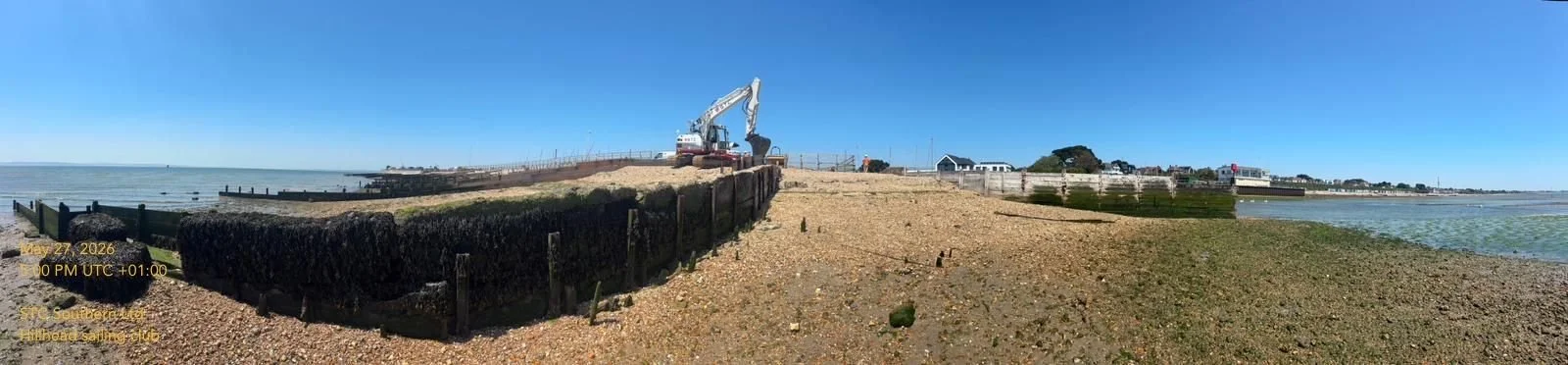
Our new digger working near a beach.